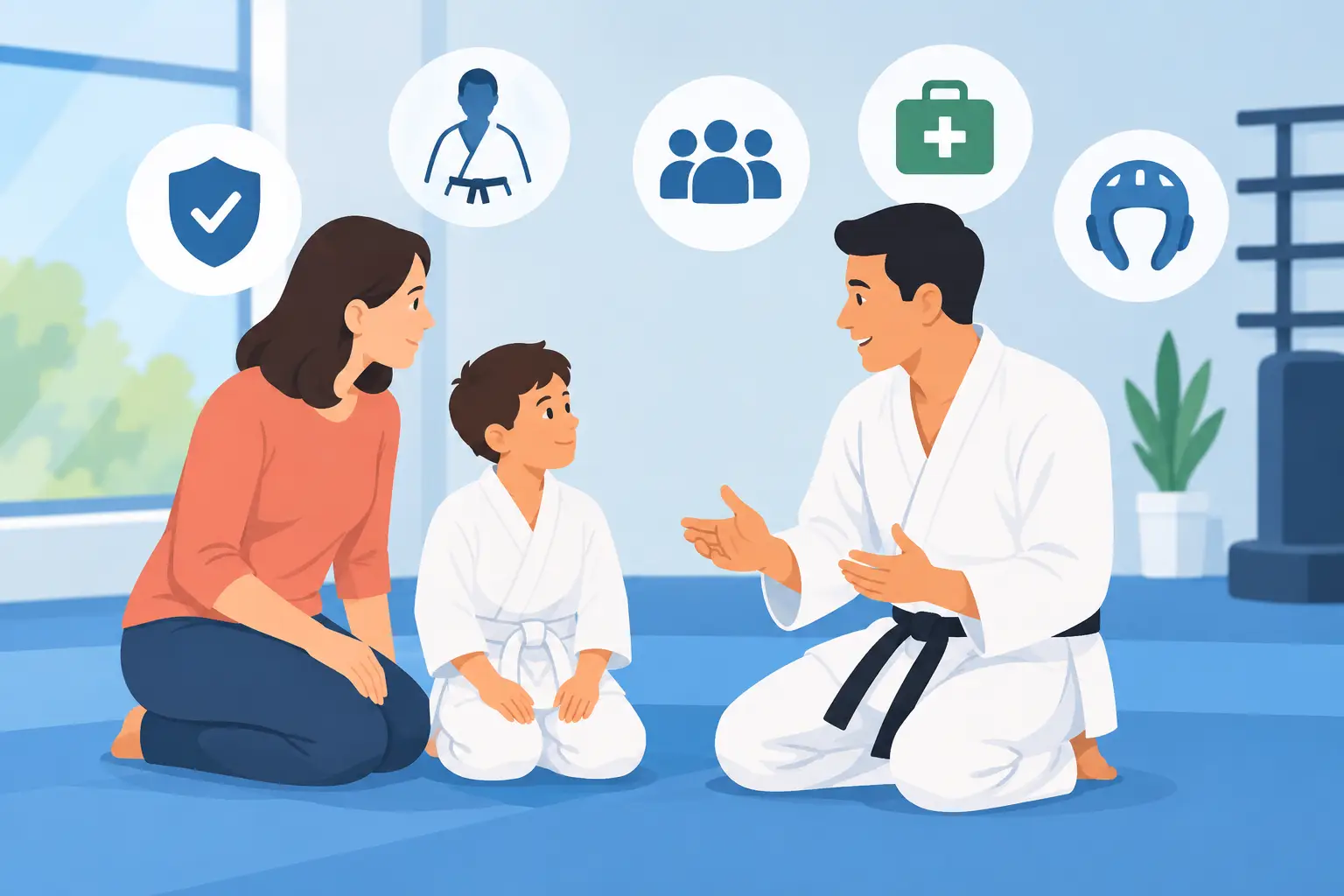
Karate Safety Questions Parents Should Ask

A child comes home from their first karate class smiling, energized, and proud of the new stance they learned. Then comes the parent question that matters most: is this truly safe? Asking the right karate safety questions is not a sign of hesitation. It is how families choose a program where children can build confidence, focus, and practical skill with clear standards and patient guidance.
Karate is a contact-capable martial art, which means safety is not an afterthought. It is part of the lesson plan, from how students line up and listen to how they learn a block, fall, strike a target, or work with a partner. A well-run dojo teaches students that control is strength. The goal is never to make children fearful of movement or conflict. It is to help them become capable, aware, and disciplined.
The Karate Safety Questions That Matter Most
Before enrolling, parents should look beyond a class schedule or a list of belt colors. The best questions reveal how an instructor thinks, how students are supervised, and what the school does when training becomes challenging.
Who is teaching, and how closely are students supervised?
A qualified instructor does more than demonstrate techniques. They watch posture, attention, spacing, and emotional readiness. This is especially important for children ages 5 to 12, who may have very different coordination levels and comfort with physical contact.
Ask how instructors adapt instruction for beginners, shy students, highly energetic children, and students who need more repetition. Individual attention does not mean lowering standards. It means teaching each student the correct movement at a pace that helps them succeed safely.
At Bay Area's Best Kosho Ryu Kenpo Karate, traditional instruction is paired with a family-centered approach. Students are expected to focus and follow direction, while being supported as they develop the habits and confidence to meet those expectations.
How do beginners learn contact safely?
New students should not be pushed into uncontrolled sparring. Safe martial arts training follows a progression. Students first learn body position, balance, distance, and how to stop a technique on command. They practice strikes on pads or targets before working with partners, and they learn defensive movement before facing more complex drills.
For younger students, much of the early work may be non-contact or light-contact and highly structured. The instructor should explain the rules before every partner activity and stop the drill immediately when control slips. Age, maturity, experience, and class size all affect when a student is ready for the next level.
This progression matters because technical precision protects both students. A punch thrown with poor alignment can strain the wrist. A student who does not understand distance can collide with a partner. Training correct mechanics early builds safer habits that carry into advanced practice.
What protective equipment is required?
The answer depends on the activity. Students may use padded targets for striking practice, while sparring can require gear such as gloves, headgear, mouthguards, shin or foot protection, and a groin protector when appropriate. Equipment should fit properly, be clean, and be used according to the dojo's rules.
Protective gear reduces risk, but it does not replace discipline. A student wearing gloves still needs to control speed and power. A mouthguard still needs to be paired with respectful behavior. Parents should be wary of programs that treat gear as permission for rough contact rather than one layer of a broader safety system.
Ask whether the school provides guidance on what to buy, how to size it, and when each item is required. Clear answers show that the dojo has thought through the details.
Safety Begins Before Sparring
Many people hear the word karate and immediately think of punches and kicks. In a traditional program, however, safe practice begins with basics that may look simple from the outside.
Students learn to bow, listen for commands, maintain personal space, and move with awareness. They warm up to prepare joints and muscles for training. They practice stances that improve balance and controlled footwork that helps prevent trips and collisions. These routines build concentration alongside physical readiness.
A good warm-up should match the class. Children need movement that keeps them engaged without exhausting them before technical training begins. Teens and adults may need additional mobility work based on their fitness level, prior injuries, and training goals. There is no single routine that fits everyone, which is why attentive instruction matters.
Parents can also help by making sure their child arrives rested, hydrated, and dressed for movement. Long hair should be secured, jewelry should be removed, and fingernails should be kept short for partner work. These small habits reinforce a larger lesson: preparedness is part of respect for yourself and your training partners.
How Is Sparring Handled?
Sparring can be one of the most valuable parts of martial arts training, but only when it is purposeful. Students learn timing, distance, composure, and the ability to make decisions under pressure. Those are practical self-defense skills, but they are also life skills. A student who can stay calm, listen, and make a measured choice when challenged is developing real maturity.
The right sparring format depends on the student's age and experience. A first-time child should not be placed with a much larger or more advanced partner. Pairings should account for size, skill, and temperament. Rounds should have clear rules, a defined level of contact, and active supervision.
Ask how the instructor addresses overly aggressive behavior. The answer should be direct: the activity stops, the student is corrected, and safety comes before winning. In a healthy dojo culture, students do not earn respect by hurting someone. They earn it through control, effort, and the willingness to learn.
It is also reasonable to ask whether a child can observe or build confidence through drills before participating in sparring. Some children are ready quickly. Others need time. Patience is not weakness. It is often what allows a student to stay with training long enough to become strong.
What Happens if a Student Is Hurt or Feels Uncomfortable?
Minor bumps, sore muscles, and occasional bruises can happen in any active sport. The key question is how a school responds. Instructors should know the difference between normal training discomfort and a situation that requires the student to stop, rest, receive first aid, or seek medical evaluation.
Parents should ask about the dojo's injury procedures, emergency contacts, and communication practices. If a child reports pain, dizziness, fear, or repeated discomfort, the instructor should take it seriously. No student should be pressured to train through an injury or made to feel embarrassed for speaking up.
Emotional safety deserves equal attention. Martial arts should challenge students, but correction should be firm without being humiliating. Children learn resilience when they are allowed to make mistakes, receive specific feedback, and try again. That is the spirit of nana korobi ya oki: fall down seven times, get up eight. The lesson is perseverance with guidance, not pressure without support.
Can Karate Help Prevent Conflict Outside the Dojo?
Parents often ask whether martial arts makes children more likely to fight. In a responsible program, the opposite is the goal. Students are taught that physical skills come with responsibility. They learn to avoid unnecessary conflict, use awareness, set boundaries, and seek help from trusted adults when needed.
Practical self-defense is not simply a collection of techniques. It includes judgment. A student who understands when to create distance, use a clear voice, leave an unsafe situation, or report a problem is better prepared than someone who only knows how to throw a punch.
This is where dojo values become visible in daily life. Respect, self-control, concentration, and perseverance are not limited to class. They can help a child handle frustration at school, help a teen manage social pressure, and help an adult respond more calmly under stress.
Choosing a Dojo Where Safety Is Part of Mastery
A safe karate school should welcome thoughtful questions. Visit a class if possible and watch how students are corrected. Notice whether the instructor knows names, whether beginners receive attention, and whether children appear focused without looking intimidated. Observe how partners treat one another after a drill. Those moments tell you more than a brochure ever could.
The right dojo will not promise that training is risk-free, because no physical activity can make that promise honestly. It will show you how risk is managed through skilled instruction, careful progression, proper equipment, clear rules, and a culture of respect. When students learn that discipline and safety belong together, they gain more than karate skills. They gain the steady confidence to keep getting up, learning, and moving forward.
Comments