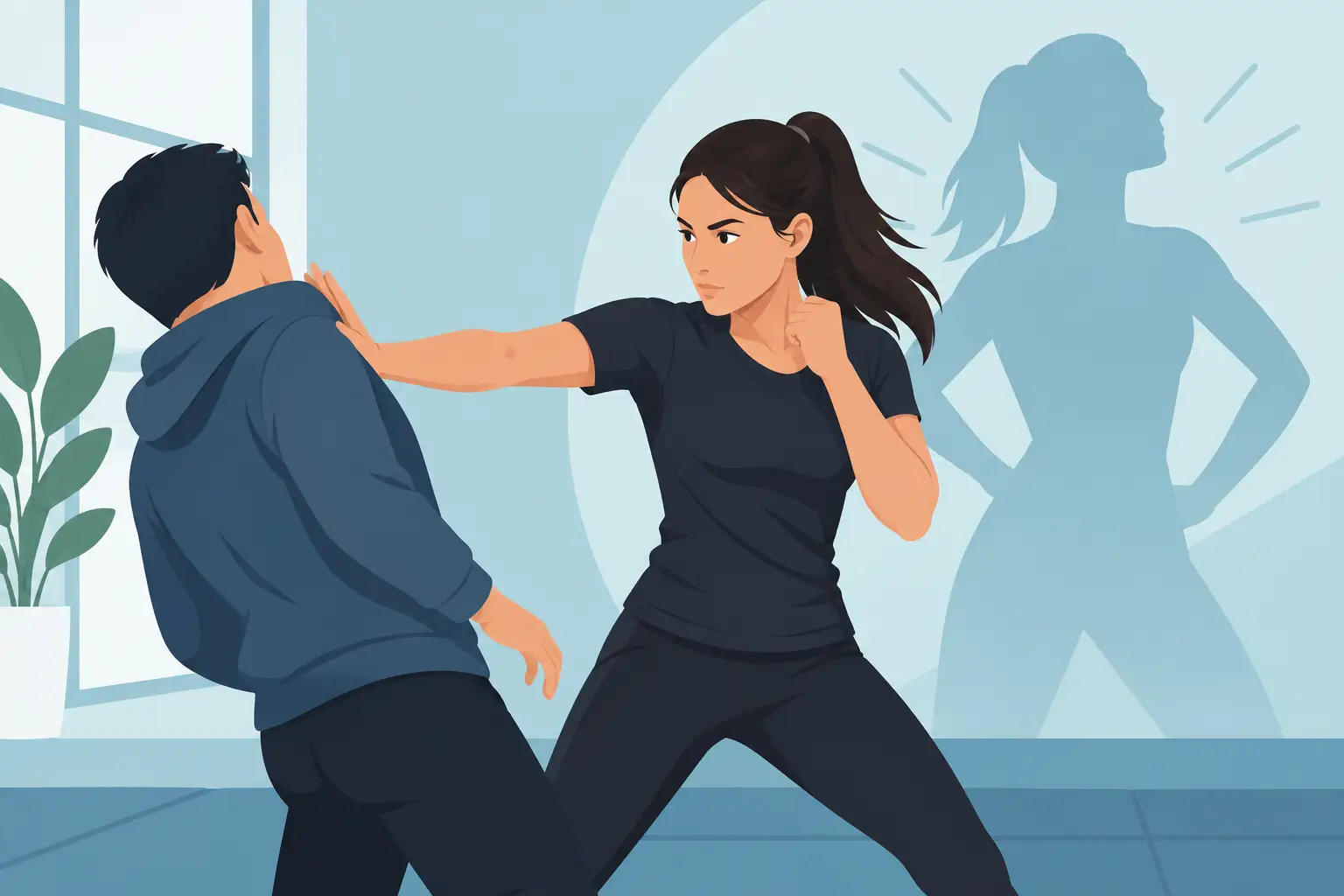
Practical Self Defense Training That Builds Confidence

A child freezes when a classmate crowds their space. A teenager feels uneasy walking from the parking lot after practice. An adult wants to carry themselves with more awareness without living in fear. Practical self defense training prepares people for these moments by building calm decision-making, physical skill, and the confidence to act with control.
At its best, self-defense is not about looking for a fight or learning dramatic moves for show. It is about recognizing trouble early, creating distance, setting boundaries, and using effective techniques only when there is no safer option. Traditional Kosho Ryu Kenpo provides a disciplined path for learning those skills while developing habits that strengthen school, work, family life, and personal character.
What Makes Self-Defense Training Practical?
Practical training starts with reality. A technique must be understandable under stress, appropriate for the student’s age and ability, and practiced often enough that it becomes a reliable response rather than a vague idea. That calls for more than an occasional lesson on escaping a grab. It requires consistent instruction in stance, balance, movement, awareness, timing, and composure.
Students learn that the first goal is safety, not victory. Whenever possible, that means using a clear voice, moving toward people or well-lit spaces, contacting a trusted adult or emergency services, and leaving. Physical self-defense is a last resort, but it should be taught seriously. When a person cannot safely get away, they need simple, well-rehearsed options that help them protect themselves and create an opportunity to escape.
This is where technical precision matters. A student who understands distance, posture, and body mechanics has a better foundation than someone who only memorizes a sequence of strikes. Training also teaches judgment: when to disengage, when to seek help, and why restraint is a mark of strength.
Practical Self Defense Training Begins Before Contact
The most useful self-defense skill is often awareness. Students are taught to notice their surroundings without becoming anxious: where the exits are, who is nearby, whether a situation is changing, and where they can go for help. This kind of observation becomes a quiet habit, not a constant state of alarm.
For children, awareness may mean staying with their group, knowing which adults are safe to approach, and understanding that they do not need to keep secrets that make them uncomfortable. They can practice strong posture, eye contact, and a clear voice that says, “Stop,” “No,” or “I need help.” Those skills are age-appropriate, practical, and valuable far beyond a dojo.
Teenagers benefit from conversations about peer pressure, online communication, parties, rides, and the false confidence that can come from assuming a situation will stay harmless. Adults may focus more on personal space, parking lots, workplace boundaries, and protecting their families. The principles remain similar, but good instruction adapts scenarios and expectations to the student.
Avoidance is not weakness. Choosing not to escalate a conflict takes self-control, especially when someone feels embarrassed, angry, or challenged. The discipline to pause, assess, and move away reflects the same warrior habits students practice every time they listen carefully, follow instruction, and return to a difficult skill after a mistake.
The Skills That Need Consistent Practice
Effective self-defense is built through repetition. Students need to move with a stable base, protect their balance, manage distance, and respond without overthinking. A traditional martial arts program gives those fundamentals a home in every class rather than treating them as a one-time seminar topic.
In a Kosho Ryu Kenpo setting, training may include controlled striking, blocks, footwork, defensive positioning, escape concepts, and partner drills. Each element has a purpose. Footwork helps a student avoid being trapped. A strong stance supports balance. Focused movement helps make a response efficient rather than wild or panicked.
Controlled partner practice is especially valuable because it teaches students to work with another person’s size, energy, and movement while respecting boundaries. It should be supervised, progressive, and never designed to intimidate beginners. Children and adults do not need the same drills, intensity, or explanations. Individualized coaching allows each student to develop skill at a pace that is challenging but safe.
Fitness supports practical ability, too. Strength, coordination, flexibility, and cardiovascular endurance can help a student move confidently and recover their balance. Yet a good program does not mistake exhaustion for preparation. The goal is functional fitness paired with thoughtful technique, not simply the hardest workout in the room.
Confidence Without Carelessness
Parents often want their children to become more confident, and for good reason. Confident children are more likely to speak up, make eye contact, and recover when something goes wrong. Still, true confidence is different from acting tough. It comes from knowing, through practice, that they can stay composed and use their training responsibly.
That distinction matters in self-defense. Students should never be told that a few classes make them invincible or that one technique works in every situation. Size, environment, surprise, multiple people, and the presence of weapons all change the risk. The responsible response is to avoid danger when possible, get to safety, and seek help.
Martial arts training helps students face uncertainty with more steadiness. They learn to breathe through frustration, accept correction, and improve one detail at a time. The Japanese philosophy of nana korobi ya oki - fall down seven times, get up eight - belongs here. Resilience is not pretending that fear or failure does not exist. It is learning how to regain your footing and make the next wise choice.
Why Family-Oriented Training Matters
A supportive dojo gives practical instruction room to take root. Students learn more when they feel safe asking questions, making mistakes, and working beside people who want them to succeed. For younger children, that community reinforces the messages parents are already teaching at home: respect others, listen carefully, control your body, and ask for help when needed.
For teens, the dojo can become a place where discipline is recognized as strength rather than a burden. For adults, it offers the rare chance to train with focus, relieve stress constructively, and make measurable progress alongside people who understand that everyone begins somewhere.
At Bay Area's Best Kosho Ryu Kenpo Karate, the standard is serious training with patient instruction. Beginners can start with the basics, while continuing students can pursue deeper technical mastery. In both cases, progress is not measured only by belts or athletic ability. It is visible in better focus, stronger self-control, improved fitness, and a more confident presence.
Choosing a Program That Teaches Responsibility
When comparing martial arts schools, look beyond promises of fast results. Ask how the school teaches awareness, de-escalation, and safe partner work. Observe whether instructors explain why a technique works, correct students with patience, and maintain clear standards for respect and control.
A quality program should make room for different learning styles and physical starting points. It should challenge students without humiliating them, and it should treat self-defense as a serious responsibility rather than entertainment. Trial classes can be useful because families can see how instructors communicate, how students treat one another, and whether the atmosphere feels both welcoming and focused.
The right training experience will not leave a student eager to prove themselves in public. It will help them walk through the world with steadier posture, sharper awareness, and the quiet confidence to choose safety first. That is a skill worth practicing, one patient class at a time.
Comments