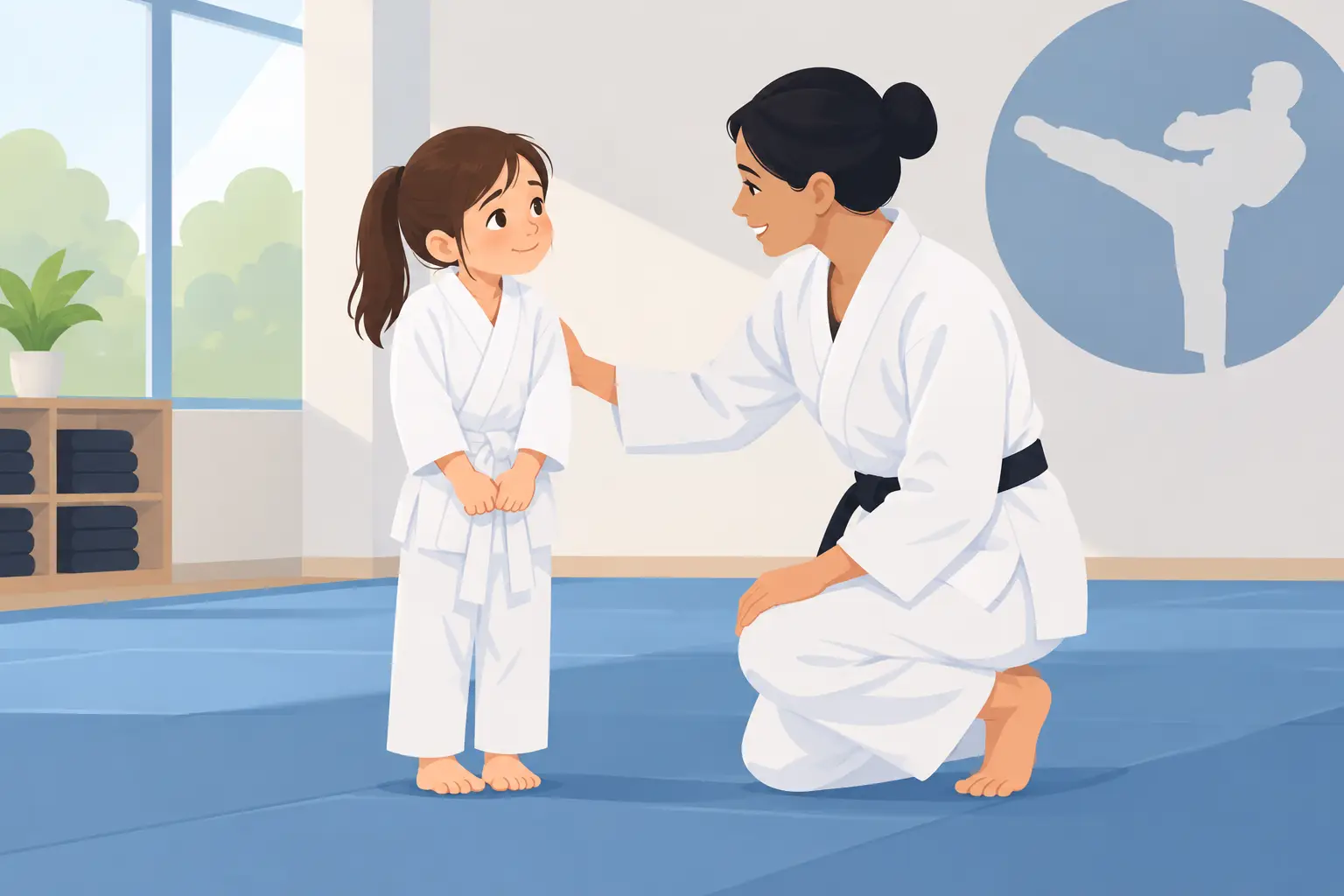
Karate Classes for a Shy Child: A Strong Start

A shy child is not a child who lacks potential. Often, they are careful observers: the student who watches before joining, speaks softly in a new group, or worries about making a mistake in front of others. The right karate classes for a shy child do not try to change that personality. They give that child a structured place to grow stronger, speak with more confidence, and learn that progress can happen one small step at a time.
For many families, the question is not whether their child needs more activity. It is whether an activity will feel safe enough for them to participate. A supportive traditional dojo can offer both clear expectations and patient encouragement - a powerful combination for children who take time to warm up.
Why Karate Can Fit a Shy Child
Karate has a rhythm that many shy children appreciate. Students know where to stand, when to bow, how to listen, and what comes next. Instead of being asked to jump into a loud team game or compete for attention, they can focus on a specific skill: a stance, a block, a strike, or a sequence of movements.
That predictability matters. When children understand the routine, they have more mental space to practice courage. A child may be quiet during their first few classes, but they can still be fully engaged. They are learning the names of techniques, following instruction, strengthening coordination, and seeing that they belong in the group.
Traditional Kosho Ryu Kenpo also creates a meaningful connection between physical training and character. A student does not need to be naturally outgoing to develop warrior habits. They need a place where effort is noticed, standards are clear, and mistakes are treated as part of training.
Confidence Is Built Through Repetition, Not Pressure
Parents sometimes hope karate will quickly make their child more social or more assertive. It can help with both, but confidence rarely arrives all at once. For a shy child, confidence is usually built through repeated proof: “I can do something that once felt unfamiliar.”
The first win may be simple. A child walks onto the mat without holding a parent’s hand. Next, they answer “yes, sir” or “yes, ma’am” clearly. Later, they demonstrate a technique with a partner, volunteer to lead a line, or test for their next belt.
Each moment may look small from the outside. To the child, it can feel enormous. Good instruction recognizes that difference. It challenges students without putting them on the spot before they are ready.
At Bay Area’s Best Kosho Ryu Kenpo Karate, the goal is not to turn every student into the loudest voice in the room. It is to help each student develop steady, unstoppable confidence rooted in real skill, self-control, and preparation.
A Quiet Child Can Be a Focused Student
Shyness is sometimes mistaken for a lack of interest. In a karate class, quiet students can be exceptionally attentive. They often notice details in posture, foot placement, and timing. With individualized guidance, that attention can become technical precision.
A child who is reluctant to speak in a group may still take pride in a strong front stance or a well-executed form. As their body learns the movements, their mind learns something equally valuable: they can stay with a challenge. This is the beginning of resilience.
The Japanese perseverance philosophy of nana korobi ya oki - fall down seven times, get up eight - is especially meaningful here. Shy children may feel mistakes intensely. Karate teaches them to reset, try again, and continue with respect for themselves and others.
What Supportive Karate Instruction Looks Like
Not every martial arts program is equally comfortable for every child. A high-pressure environment may cause a shy beginner to withdraw, while a class with no structure can leave them unsure of what to do. The best fit combines warmth with disciplined standards.
Look for an instructor who learns your child’s name, gives specific feedback, and understands that participation can grow over time. Children should be encouraged to use their voice, but never humiliated for being hesitant. They should be corrected clearly, yet treated with patience.
A supportive dojo community also matters. Respect is not just something students say during a bow. It should shape how classmates partner with one another, how instructors handle mistakes, and how families are welcomed into the school.
For children ages 5 to 12, classes should be organized around age-appropriate movement, listening skills, practical self-defense awareness, and character development. A five-year-old may need help with transitions and attention, while an older child may be ready for greater technical detail and leadership responsibilities. Strong programs meet students where they are and give them a path forward.
How Parents Can Help a Shy Beginner Settle In
The first few classes are an adjustment. Your child may enjoy training but still say little about it afterward. They may want to watch before participating fully, or feel nervous before class even after a positive session. This does not necessarily mean karate is a poor fit.
Give the experience enough time to become familiar. Arriving a few minutes early can help a child adjust before the class begins. A calm, confident goodbye is usually more helpful than repeated reassurance at the door. Let them know you believe they can handle the class, and that it is okay to be new.
Afterward, avoid turning every ride home into a performance review. Instead of asking, “Did you make friends?” try questions such as, “What technique did you practice?” or “What felt easier today?” These questions let a child share on their own terms while reinforcing progress.
It also helps to praise effort rather than personality. Saying, “I noticed you stayed on the mat even when you felt nervous,” teaches more than, “You were so brave.” The first connects courage to an action they can repeat.
When Karate May Need an Extra Adjustment
Karate can be an excellent fit for many shy children, but it is not a one-size-fits-all answer. Some children need a smaller class, a slower introduction, or a chance to observe before joining. Others may be dealing with anxiety that deserves additional support from a qualified health or school professional.
Parents should also distinguish between ordinary shyness and a child who feels overwhelmed in most settings. A caring instructor can adapt teaching approaches and offer encouragement, but martial arts instruction is not a replacement for professional care when that care is needed.
The key is communication. Share useful information with the instructor before class: whether your child is slow to warm up, uncomfortable with partner drills, sensitive to loud environments, or motivated by clear goals. That context helps the instructor offer individual attention without making your child feel singled out.
The Long-Term Gift of Training
The most meaningful changes may not appear as a dramatic personality shift. Your child may remain thoughtful, observant, and reserved. Those can be strengths. What changes is their ability to act even when they feel uncertain.
Over time, karate students learn to stand tall, make eye contact, follow through on a difficult task, and recover after a setback. They learn to respect boundaries, control their bodies, and use their voices when it matters. These lessons can carry into the classroom, friendships, family responsibilities, and unfamiliar situations.
A shy child does not need to become someone else to thrive. With patient instruction, a welcoming dojo, and the discipline to keep showing up, they can discover a quiet kind of strength that stays with them long after class ends.
Comments