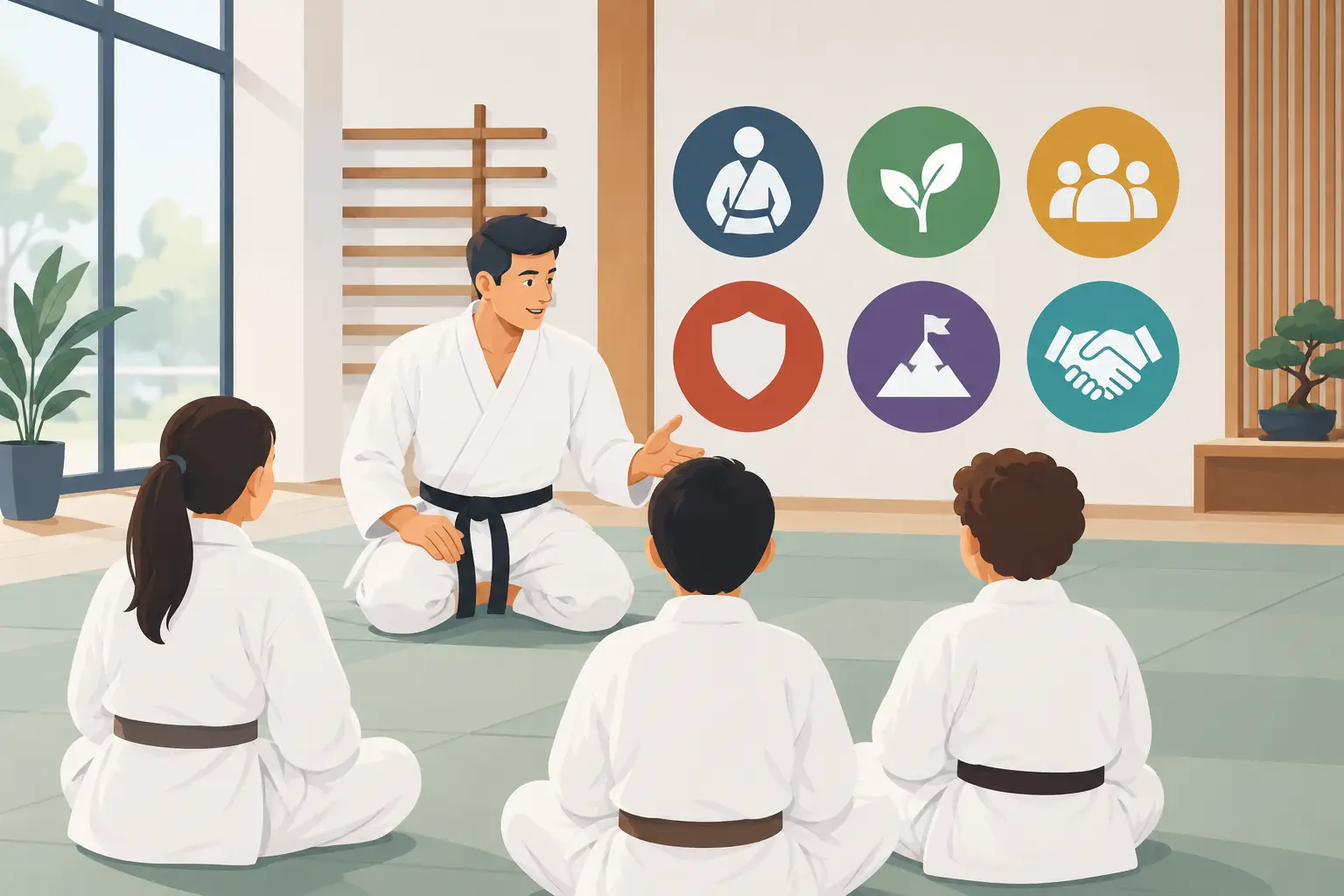
What Makes a Good Dojo? Standards That Help You Grow

A child ties on a white belt, steps onto the mat, and looks to an instructor for direction. That moment says more about what makes a good dojo than the color of the walls, the size of the training floor, or the number of trophies in a display case. A good dojo gives students clear expectations, patient guidance, and a place where effort is noticed. It should feel welcoming from the first class, while still asking every student to rise to a meaningful standard.
For parents in Pacifica, Daly City, and surrounding Bay Area communities, choosing a martial arts school is about more than finding an after-school activity. You are choosing an environment that will influence how your child handles frustration, listens to instruction, works with others, and believes in their own ability. Teenagers and adults deserve that same kind of thoughtful training environment: one that develops real skill, stronger fitness, and habits that carry beyond the mat.
What Makes a Good Dojo for Lasting Growth?
A good dojo is serious about martial arts without being harsh or intimidating. It teaches discipline as a form of respect, not fear. Students learn that progress comes from showing up, paying attention, practicing carefully, and trying again after mistakes.
That balance matters. A school can be friendly but lack structure, leaving students unsure of what they are working toward. It can also be overly rigid, making beginners feel embarrassed to ask questions or make normal mistakes. The strongest dojo culture combines high standards with encouragement. Students know that effort is required, and they also know their instructor and classmates want them to succeed.
In traditional training, the goal is not simply to earn the next belt. Belts can mark progress, but character is revealed in the work between promotions. A student who keeps practicing a difficult technique, returns after a disappointing class, or helps a newer classmate is developing the perseverance that martial arts are meant to teach.
Skilled instruction is more than leading a workout
A good instructor does not spend class simply calling out exercises while students copy whatever they can see. They teach with purpose. They explain stance, balance, timing, distance, focus, and control. They correct details because details matter, especially when students are learning practical self-defense and building safe movement patterns.
For children, skilled instruction also means knowing how to teach at the child’s level. A five-year-old may need short, clear directions and positive repetition. An older child may be ready to take greater responsibility for form and focus. A teenager may need a constructive outlet for stress and an environment where discipline is expected. Adults often need coaching that respects their starting fitness level while challenging them to improve.
Individual attention is a major sign of quality. In a crowded class, every student will not receive the same correction at the same moment. But a strong instructor notices who is struggling, who is losing focus, who needs a safer modification, and who is ready for the next challenge. That kind of attention helps students progress without feeling overlooked.
Technical precision builds confidence that is earned
Confidence should not be empty praise. In a good dojo, confidence grows because students can see themselves improve. Their stances become stronger. Their movements become more coordinated. They learn to focus through a sequence, respond calmly to instruction, and use controlled power.
Traditional Kosho Ryu Kenpo training places value on this kind of technical mastery. Students are not asked to rush through techniques just to look impressive. They learn why body position, awareness, and control matter. This creates a foundation that supports both martial arts skill and practical self-defense.
Precision does not mean perfection on day one. Beginners should expect to feel awkward at first. That is normal. The right school gives them a path forward: practice the basics, accept correction, make an adjustment, and repeat. Over time, the student discovers that difficult things become manageable through disciplined effort.
Safety, Respect, and Clear Standards on the Mat
Safety is not an optional feature of a good dojo. It is part of good martial arts instruction. Students should learn how to train with control, respect personal space, follow rules, and protect training partners. Physical conditioning has a place in karate, but it should be appropriate for the student’s age, experience, and health.
Parents should pay attention to how instructors manage a class. Are students supervised? Are expectations explained clearly? Does the instructor correct unsafe behavior immediately and calmly? Do students learn to use techniques responsibly rather than treating martial arts as permission to be aggressive?
Respect should be visible in everyday interactions. That includes how students speak to instructors, how instructors speak to students, and how classmates treat one another. A dojo can maintain traditional customs while still being warm and accessible. Bowing, listening, and following class etiquette are not empty rituals when they teach students to be present, humble, and considerate.
Clear standards are especially valuable for children. When a child knows what is expected, they have room to grow. They learn that self-control is not something they either have or do not have. It is a skill they practice, one decision at a time.
The community should support, not pressure
Martial arts are personal, but no one trains alone. The atmosphere in a dojo affects whether students stay with training long enough to experience its deeper benefits. A good community celebrates hard work, welcomes beginners, and makes room for different strengths and learning styles.
This does not mean everyone progresses at the same pace. One student may develop flexibility quickly, while another gains focus or confidence first. A quality dojo avoids comparing students in ways that discourage them. Instead, it helps each person recognize their own progress and take the next appropriate step.
Family involvement can make a powerful difference for younger students. Parents do not need to become martial arts experts, but they should feel comfortable asking how their child is doing, what skills are being taught, and how to reinforce positive habits at home. A school that communicates openly helps families connect dojo lessons to schoolwork, chores, friendships, and everyday responsibility.
At Bay Area’s Best Kosho Ryu Kenpo Karate, that supportive culture is paired with a belief students can carry for life: nana korobi ya oki, fall down seven times, get up eight. It is a reminder that resilience is built through practice, not handed to anyone.
Look for Progress Beyond the Belt Rank
A good dojo should help students become more capable on and off the mat. For a child, that may mean better listening, greater patience, improved concentration, or the courage to speak up when something is wrong. For a teen, it may mean a healthier routine, stronger self-control, and confidence during a demanding stage of life. For adults, it may mean improved conditioning, practical skills, stress relief, and renewed confidence.
These outcomes take time. Be cautious of programs that promise instant discipline, guaranteed black belts, or dramatic results without consistent effort. Martial arts can be deeply rewarding, but the real value comes from regular training and a school that teaches with integrity.
It also helps to distinguish between a martial arts program and a fitness class with martial arts movements. Fitness is valuable, and a good dojo will improve it. Yet traditional martial arts add layers that a workout alone cannot provide: technical study, self-defense awareness, etiquette, controlled partner training, and a clear path of personal responsibility. The best choice depends on your goals, but families seeking character development alongside physical activity should look for those deeper elements.
Experience the teaching before making a decision
The most reliable way to evaluate a dojo is to watch or join a class. Notice whether the instructor knows students by name. Watch how corrections are given. See whether beginners receive help instead of being left behind. Pay attention to whether students appear focused, engaged, and respectful, not merely exhausted at the end of class.
Ask what the school teaches at each age level and how it handles students who need extra support. Ask how sparring or partner work is introduced, how advancement is earned, and what the school expects from students outside of class. Honest answers will tell you far more than a polished sales pitch.
A good dojo will not expect a new student to arrive fully confident, coordinated, or disciplined. It will provide the structure to build those qualities. The right first step is simply to walk onto the mat, stay open to learning, and give yourself or your child a place where getting back up is part of the lesson.
Comments