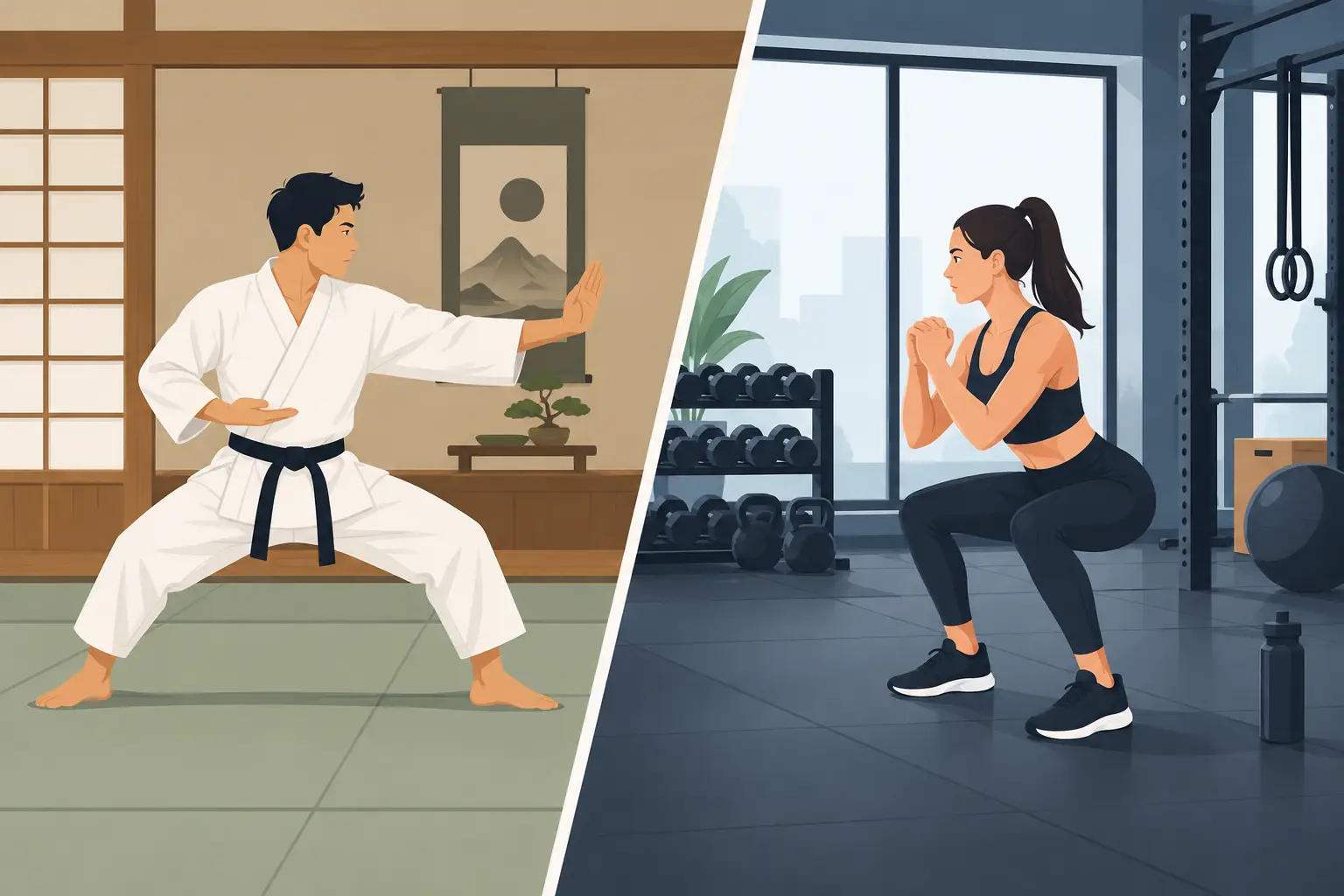
Traditional Dojo Versus Fitness Studio: What Lasts

A child finishes a hard school day, walks onto the training floor, bows in, and begins again. That small routine can become much more than an hour of exercise. When families compare a traditional dojo versus fitness studio, the real question is not simply where a student will sweat more. It is where they will build the habits, skills, and confidence that remain when training gets difficult.
Both settings can help children, teens, and adults become more active. A fitness-focused studio may offer energetic classes, fast-paced drills, and a welcoming introduction to martial arts-inspired movement. A traditional dojo offers physical training too, but places that training inside a larger path: technical mastery, self-control, respect, practical awareness, and perseverance.
For many Pacifica and Daly City families, that distinction matters. Parents are not only looking for an after-school activity. They want their child to learn how to listen, recover from frustration, stand with confidence, and treat others with respect.
Traditional Dojo Versus Fitness Studio: The Core Difference
A fitness studio generally organizes training around immediate physical outcomes. Students may work on cardio, flexibility, strength, calorie burn, or the excitement of learning moves in a group setting. Those are worthwhile goals. For an adult returning to exercise or a child who needs a fun outlet, a high-energy fitness class can be a positive starting point.
A traditional dojo treats fitness as one important result of deeper practice. Students learn why a stance matters, how balance supports power, when to move, when not to move, and how to control their energy under pressure. Progress is measured not only by how tired someone feels after class, but by the quality of their movement, the steadiness of their attention, and the maturity they show over time.
In Kosho Ryu Kenpo, a punch is not just a punch. It is an opportunity to practice posture, timing, focus, control, and responsibility. Students are expected to develop power with precision, not recklessness. That is the difference between simply doing martial arts-themed exercise and studying a martial art.
Fitness Has Value, but It Is Not the Whole Goal
There is no need to dismiss fitness-first training. Movement is valuable, especially for children who spend long school days sitting and adults juggling work and family responsibilities. A lively class can help a beginner enjoy being active, build coordination, and feel more comfortable trying something new.
The trade-off is that fitness alone can be hard to sustain when motivation drops. If the only goal is to work up a sweat, students may leave when classes become challenging, schedules get busy, or progress feels slow. Traditional training gives students reasons to continue beyond the short-term rush of a workout.
They learn that effort is part of progress. They see that a correction from an instructor is not a failure. They discover that a skill once frustrating can become natural through patient repetition. This is the spirit of nana korobi ya oki: fall down seven times, get up eight. It is a powerful lesson for a seven-year-old learning a new form, a teenager navigating pressure at school, or an adult rebuilding confidence after years away from exercise.
Technique Creates Confidence Students Can Trust
Confidence built only on encouragement can fade when life becomes uncomfortable. Confidence built through earned skill is different. A student who has practiced a stance, block, strike, and movement pattern with care knows they can respond with more control than before.
Traditional dojo training is structured to create that kind of confidence. Beginners are welcomed, but standards remain clear. Students learn fundamentals before being asked to perform more complex combinations. They receive corrections, practice again, and improve at a pace that respects both safety and individual learning needs.
For children, this process can be transformative. Some arrive hesitant to speak up or afraid of making mistakes in front of others. With steady practice, they learn to make eye contact, use a strong voice, follow directions, and keep trying after a missed step. The goal is not to create a loud child. It is to help create a child with calm, unstoppable confidence.
For teens and adults, technical training can provide a needed reset. The dojo asks for full attention. You cannot complete a precise movement while replaying every item on a school or work to-do list. Over time, that focused practice helps sharpen concentration and gives students a healthy way to manage stress.
Practical Self-Defense Requires More Than Exciting Moves
Another meaningful difference in a traditional dojo versus fitness studio is the role of self-defense. A fitness-based class may include striking drills that feel empowering. Yet practical self-defense depends on more than hitting pads with intensity. It requires awareness, distance, timing, balance, judgment, and the ability to stay composed.
Traditional Kenpo instruction develops movement with purpose. Students learn to protect themselves while understanding control and responsibility. They practice the mechanics that make techniques effective, but they also learn that avoiding danger, noticing their surroundings, and making thoughtful choices are part of personal safety.
This approach is especially reassuring for parents. Children do not need to be taught aggression to become safer. They need to learn boundaries, alertness, and the confidence to seek help or use their voice. Teenagers need realistic tools without being encouraged to take unnecessary risks. Adults need training that acknowledges real-world stress rather than pretending that self-defense is a choreographed performance.
Community Changes the Training Experience
A studio can have excellent equipment and upbeat music, but a student’s experience often comes down to whether they feel seen. Traditional dojos are built around shared standards and mutual respect. Students train alongside people at different ages and ability levels while learning that everyone begins somewhere.
That community is particularly valuable for families. Children benefit when instructors know their names, recognize their effort, and offer guidance that fits their personality. One student may need a patient reminder to slow down. Another may need encouragement to step forward and lead. Individual attention does not mean lowering expectations. It means helping each student meet meaningful expectations.
At Bay Area’s Best Kosho Ryu Kenpo Karate, the training environment is designed to be serious, supportive, and family-centered. Students are challenged to develop warrior habits while knowing they have a community behind them. That balance helps newcomers feel welcome without making the art feel watered down.
How to Choose the Right Place to Train
The best choice depends on what you want from training. If your primary goal is variety, a casual workout, or a short-term way to stay active, a fitness studio may be a good fit. Ask whether the class schedule, energy level, and coaching style will keep you motivated.
If you want martial arts to shape character alongside physical ability, look for a traditional dojo. Watch how instructors correct students. Notice whether they explain the purpose behind movements. Pay attention to how advanced students treat beginners and whether children are expected to show focus, courtesy, and self-control.
For parents, it also helps to ask what progress looks like. Is advancement based only on attendance, or do students demonstrate understanding and technical growth? Are classes organized by age and developmental needs? Does the school make room for different learning styles while still maintaining clear standards?
A trial class can answer questions that a website or brochure cannot. You can see whether your child feels comfortable, whether the instruction is patient and organized, and whether the culture reflects the values you want reinforced at home.
The Lesson That Extends Beyond the Mat
A traditional dojo does not promise that every class will be easy. It promises something more valuable: a place to practice showing up, paying attention, and improving one careful repetition at a time. Fitness grows there. So do focus, resilience, self-respect, and the ability to keep going when the first attempt does not work.
Choose a training home where your family can grow stronger together, where effort is noticed, and where every student is reminded that progress begins by getting back up.
Comments