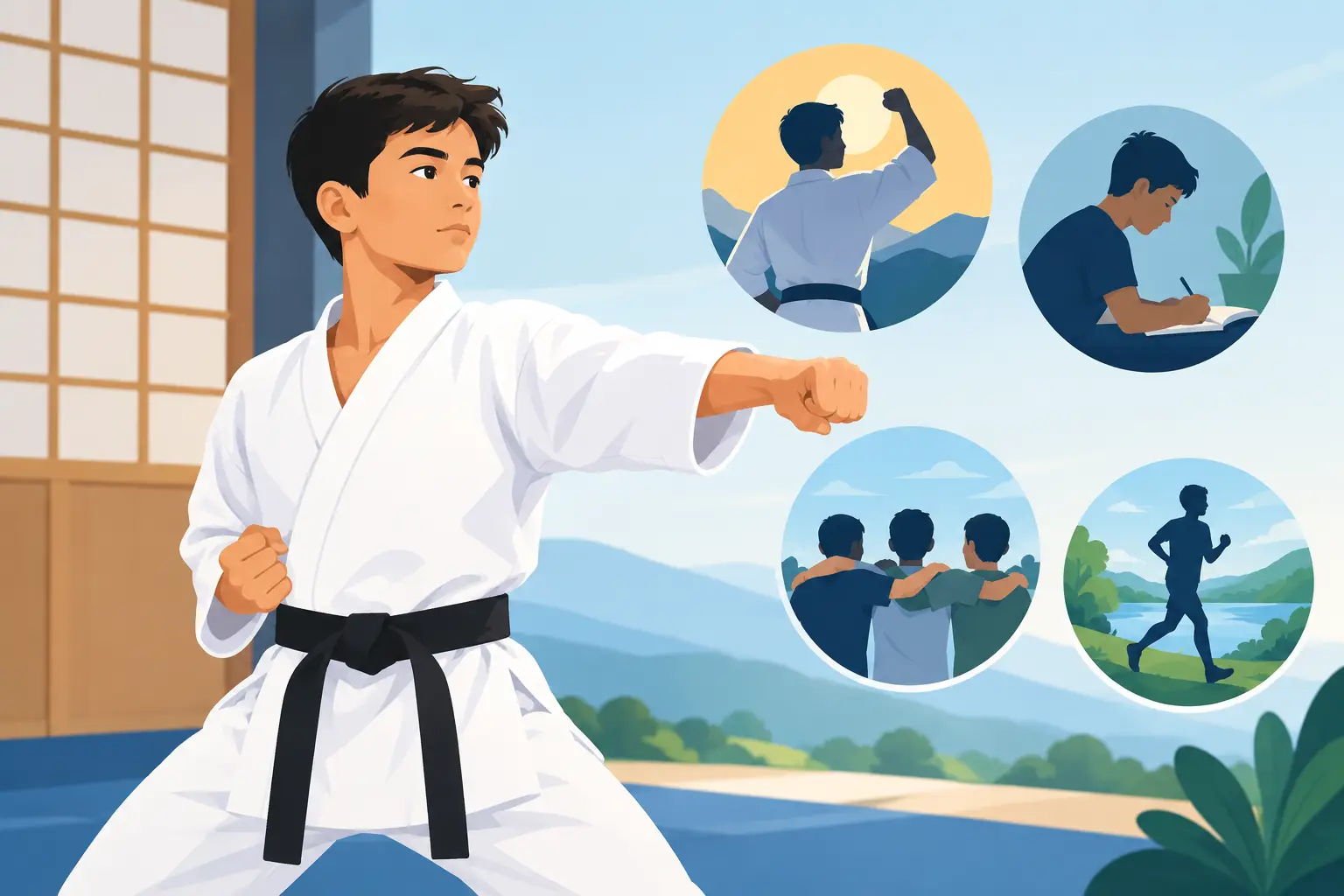
Teen Martial Arts Builds Strength Beyond the Dojo

A teenager may walk into class after a difficult school day carrying more than a backpack. There may be pressure from grades, social expectations, sports, screens, or uncertainty about who they are becoming. Teen martial arts gives that energy a constructive direction: a place to move with purpose, learn demanding skills, and earn confidence through consistent effort.
For parents, the value is not simply finding another after-school activity. The right dojo gives teens clear standards, patient instruction, positive peers, and a practical way to build habits they can use far beyond the training floor. For teens, it is a chance to become stronger without having to pretend they already have everything figured out.
Why Teen Martial Arts Meets Teens Where They Are
The teenage years call for more independence, but they also benefit from dependable structure. Teens want to be trusted with greater responsibility. At the same time, they need adults who set boundaries, correct them clearly, and expect their best effort. Traditional martial arts offers both.
In Kosho Ryu Kenpo training, students work toward technical mastery through focused movement, repetition, and attention to detail. A stance must be stable. A strike must be controlled. A self-defense technique must be practiced carefully enough to become reliable. There is no shortcut around the work, which is exactly why progress feels real.
That structure can be especially meaningful for a teen who has lost interest in activities that feel childish, overly competitive, or disconnected from real life. Karate asks students to take ownership of their effort. They learn to arrive prepared, listen closely, practice through frustration, and treat others with respect. Those are habits of a warrior, but they are also habits that help with school, work, friendships, and family responsibilities.
Confidence That Is Earned, Not Performed
Many teenagers appear confident while quietly doubting themselves. Martial arts does not ask them to put on a confident personality. It gives them repeated opportunities to do hard things safely, learn from mistakes, and see evidence of their own improvement.
A beginner may struggle to remember a sequence, hold a stance, or speak loudly during a drill. With coaching and practice, those same challenges become manageable. The student discovers that discomfort is not failure. It is part of learning.
This is where the Japanese perseverance philosophy of nana korobi ya oki matters: fall down seven times, get up eight. In a supportive dojo, a missed technique is corrected, not mocked. A difficult class is not proof that a student does not belong. It is an invitation to return, adjust, and try again.
That mindset can change how teens respond when life gets demanding. They become less likely to quit at the first setback and more capable of receiving feedback without taking it as a personal attack. Confidence grows when a student knows, from experience, that they can recover and continue.
Physical Fitness With Purpose
Teenagers need movement, especially when much of their day is spent sitting in classrooms or looking at screens. Karate develops fitness through a reason to train rather than through exercise for its own sake. Students build coordination, balance, flexibility, cardiovascular endurance, body awareness, and functional strength as they practice techniques and forms.
The goal is not to compare bodies or chase a certain appearance. The goal is to develop a capable body that responds with control. A teen who learns to generate power while maintaining balance also learns patience, posture, and awareness of how their body moves through space.
Training can complement other sports, too. Athletes often benefit from improved footwork, focus, mobility, and discipline. But martial arts also serves teens who do not identify as athletes. They do not need prior experience, exceptional flexibility, or natural confidence to begin. They need a willingness to learn and an environment that meets them at their current level.
Practical Self-Defense Starts With Awareness
Parents understandably want their teens to have practical self-defense skills. Quality self-defense training should be serious, age-appropriate, and grounded in judgment, not fear. The purpose is not to encourage confrontation. It is to help students recognize risk, use awareness, maintain boundaries, and respond decisively if they cannot avoid a dangerous situation.
Traditional Kenpo training develops controlled technique, distance management, and the ability to remain focused under pressure. Just as important, it teaches respect for the consequences of physical force. Students learn that real strength includes restraint.
Self-defense is not a single move that works in every circumstance. It depends on the environment, the threat, the student’s size and ability, and whether there is a safe opportunity to leave. A responsible program teaches teens to prioritize awareness and escape whenever possible while building skills they can draw on when they need them.
The Value of a Dojo Community
Teen years can be isolating. Students may feel defined by a social group, a school role, or a single success or failure. A martial arts dojo gives them another community where their character and effort matter.
At Bay Area’s Best Kosho Ryu Kenpo Karate, teens train alongside people working toward meaningful goals at different stages of the journey. They see that progress looks different for each person. One student may excel at speed, another at focus, another at persistence. Individualized instruction helps each teen develop without being reduced to a comparison with someone else.
A family-oriented dojo also creates opportunities for teens to model leadership. More experienced students can encourage beginners, demonstrate respectful behavior, and help create a culture where everyone can train safely. Leadership is not about being the loudest person in the room. It is about showing up consistently and helping others rise with you.
What Parents Should Look for in Teen Martial Arts
Not every martial arts school serves teenagers in the same way. Some programs focus mainly on workouts or rapid belt advancement. Others may be highly competitive, which can be a good fit for certain students but not for every family. The best choice depends on what your teen needs and what the school teaches consistently.
Look for instruction that combines high standards with patience. Teens should be challenged, but they should also understand what they are being asked to improve and how to improve it. A strong instructor corrects technique without humiliating students and recognizes effort without giving empty praise.
Pay attention to whether the school teaches more than kicks and punches. Does it emphasize respect, self-control, concentration, and perseverance? Are students expected to train with care for their partners? Is there room for beginners to ask questions and for experienced students to keep advancing? These details reveal whether a dojo is building temporary enthusiasm or lasting character.
It also helps to let your teen experience a class before making a commitment. They should notice whether the environment feels focused, welcoming, and purposeful. A little nervousness is normal when trying something new. Feeling unsafe, ignored, or pressured is not.
Progress Is Personal, but Commitment Matters
A teen may not leave every class feeling like a champion. Some days, techniques will feel awkward. Some weeks, school demands may make it harder to stay consistent. That is normal. Martial arts rewards steady practice more than perfect performance.
Parents can support the process by asking thoughtful questions after class. Instead of only asking whether training was fun, try asking what felt challenging, what they improved, or what they want to practice next time. Those conversations reinforce that growth is worth noticing.
The deeper gift of training is not a belt, a trophy, or a single impressive technique. It is the quiet knowledge a teen gains over time: I can focus. I can learn. I can get back up. Give your teen a place to practice that belief, and it can stay with them long after class ends.
Comments