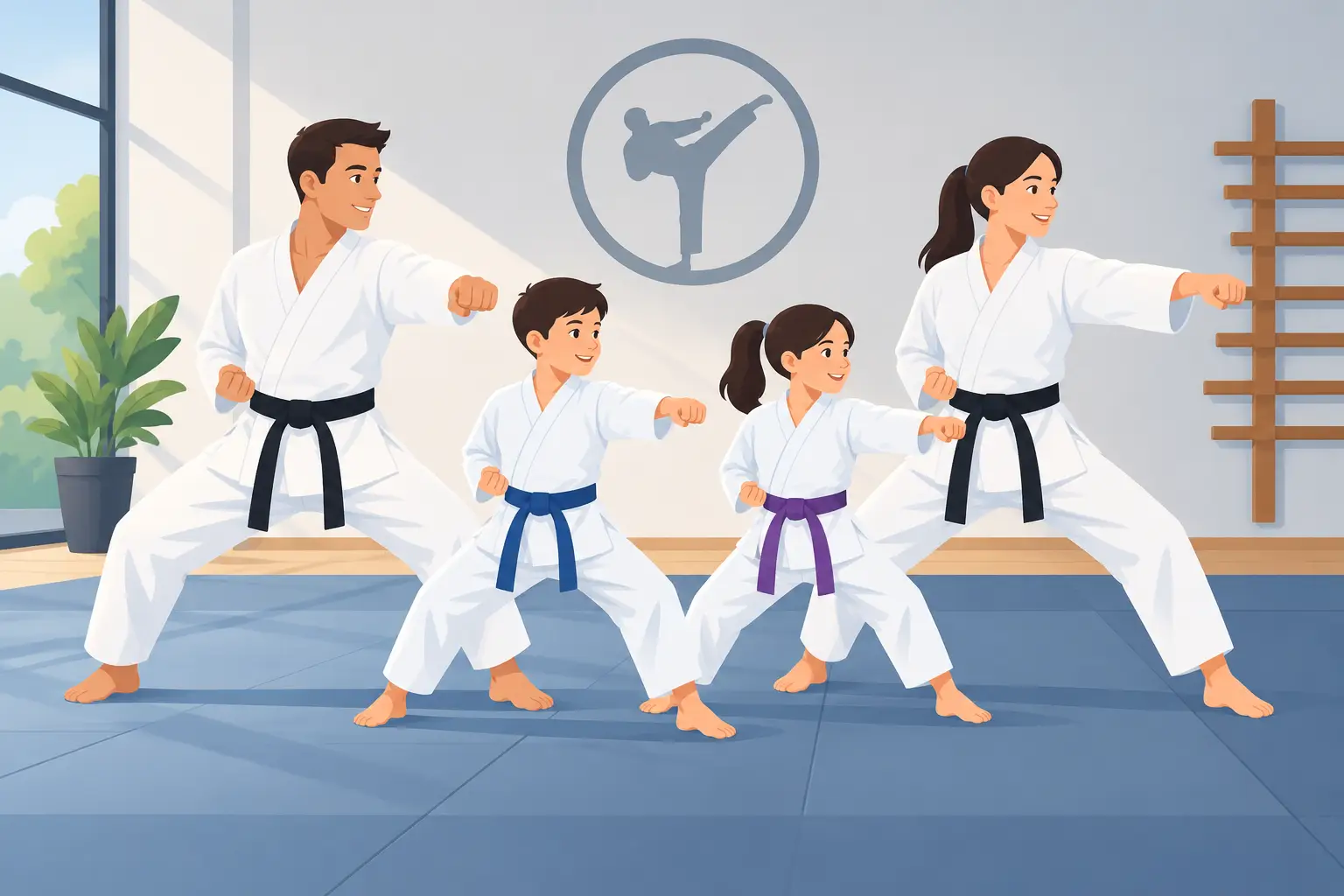
What Great Karate Schools Give Your Family

A child who avoids eye contact, quits when a skill feels hard, or struggles to settle into homework may not need another lecture. They may need a place where effort has a clear purpose. The best karate schools give children, teens, and adults a structured setting to practice focus, face challenge, and see themselves improve one class at a time.
For families in Pacifica and Daly City, choosing a dojo is about more than finding an after-school activity. It is a decision about the standards, mentors, and community that will help shape a student’s habits. Karate can be energetic and fun, but meaningful training should also teach students how to listen, persevere, respect others, and stay composed when something does not come easily.
What Families Should Look for in Karate Schools
A quality martial arts school makes its purpose clear. Is it primarily a high-energy fitness class? Is it focused on tournaments? Or does it teach a traditional art with a thoughtful path from beginner fundamentals to long-term technical mastery? None of these approaches is automatically wrong, but the right fit depends on what your family hopes to gain.
For many parents, the strongest choice is a dojo where physical training and character development are inseparable. A student should learn how to form a proper stance, strike with control, move with balance, and understand practical self-defense. At the same time, they should learn that progress comes from attention, repetition, and the willingness to try again after a mistake.
Look closely at how instructors manage a room. Clear expectations matter. So does patience. A child may need firm correction to improve a technique, while another needs extra time to feel comfortable participating. Skilled instructors hold students to meaningful standards without making beginners feel embarrassed for being beginners.
The atmosphere should be welcoming, but not aimless. A dojo can be warm and family-oriented while still asking students to stand with discipline, listen carefully, and give their best effort. That balance is where confidence grows. Confidence is not empty praise. It is the earned belief that a student can handle hard things.
Traditional Training Gives Progress a Purpose
Traditional Kosho Ryu Kenpo offers more than a collection of moves. Students develop their skills through a structured curriculum that emphasizes focused movement, technical precision, body awareness, and control. Each new skill rests on the habits developed before it.
That structure can be especially valuable for children. They learn that a belt is not simply a reward for showing up. It represents work, improved understanding, and the maturity to carry greater responsibility. When students prepare for advancement, they practice setting a goal, accepting feedback, and returning to the details until their performance improves.
For teenagers, traditional martial arts can provide a steady counterweight to academic pressure, social distractions, and constant screen time. Training asks them to be present. They cannot perform a form well while their attention is somewhere else. They cannot safely practice with a partner without awareness and respect. Over time, that focus can carry into school, relationships, and decisions outside the dojo.
Adults often arrive for fitness or self-defense and stay because training gives them a disciplined routine. Karate develops strength, coordination, mobility, conditioning, and mental clarity. It also offers something many busy adults need: a place to be a beginner again, work patiently, and measure progress by more than a number on a scale.
The Lessons Behind Every Technique
A strong karate program does not promise that every student will become fearless. Fear is a normal response to unfamiliar challenges. The goal is to help students act with control even when they feel uncertain.
Consider a child learning a new form. At first, the sequence may feel confusing. Their arms move at the wrong time. Their stance is too high. They may want to stop before they get it right. With guidance and repetition, the pieces begin to connect. The student discovers a powerful lesson: confusion is not failure. It is often the first stage of learning.
This is the spirit behind nana korobi ya oki: fall down seven times, get up eight. It is not a slogan about pretending setbacks do not hurt. It is a practice of responding to setbacks with patience and renewed effort. Students carry that warrior habit into a difficult math assignment, a tense conversation, a job interview, or any moment when it would be easier to give up.
Respect is another lesson that deserves more than a quick mention. In a well-run dojo, respect is active. Students bow, follow instructions, take care of training partners, and learn to use their abilities responsibly. They understand that self-defense is not about seeking conflict. It is about awareness, composure, and protecting oneself when necessary.
Why Age-Appropriate Instruction Matters
Children ages 5 through 12 need instruction that meets them where they are. Younger students often learn best through clear routines, visible goals, and engaging drills that build coordination and attention. They need short, direct corrections and frequent opportunities to practice doing the right thing.
Older children can take on more complex forms, partner work, and responsibility. They may also begin to understand the connection between their effort in class and their confidence outside it. A thoughtful instructor recognizes that two students of the same age may have different strengths, learning styles, and comfort levels. Individual attention helps each child progress without losing the shared discipline of the group.
Teenagers need a program that respects their growing independence while giving them a constructive challenge. They benefit from being treated seriously, held accountable, and encouraged to become positive examples for younger students. Martial arts can give teens a healthy place to build physical confidence without the pressure to perform for an audience.
Adults need training that is demanding but sustainable. A good program can adapt to different fitness levels and prior experience without lowering its standards. The first class should feel accessible, but there should also be enough depth to keep a dedicated student learning for years.
Questions to Ask Before Joining a Dojo
A visit tells you more than a brochure ever can. Watch a class and notice whether instructors know students by name, whether corrections are specific, and whether students appear engaged rather than simply entertained. Pay attention to how experienced students treat newcomers. Community is shown in these small moments.
Ask how the curriculum works, what students are expected to learn at each stage, and how the school approaches practical self-defense. Find out whether families can try a class before enrolling. A trial class gives a prospective student the chance to experience the pace, teaching style, and culture firsthand.
It is also reasonable to ask how the school handles challenges. What happens when a child is shy, frustrated, distracted, or struggling with a skill? The answer should reflect both patience and accountability. A dojo should not expect perfection, but it should help students build the habits that make improvement possible.
At Bay Area’s Best Kosho Ryu Kenpo Karate, that balance means serious traditional instruction delivered in a supportive, family-run community. Students are encouraged to grow at their own pace while developing the focus, resilience, and technical foundation that make karate a lifelong practice.
Progress Is More Than a Belt Color
Belts are meaningful markers, but the most valuable changes are often visible elsewhere. A parent may notice that their child speaks more clearly, gets ready for school with fewer reminders, or handles disappointment with greater calm. A teen may become more willing to take responsibility. An adult may find that regular training creates more energy and steadiness throughout the week.
Those changes do not happen after one perfect class. They come from returning to the mat, paying attention to the basics, and choosing effort over excuses. The right dojo gives students a place to practice that choice among people who want to see them succeed.
When you visit karate schools, trust what you observe: the care in the instruction, the standard of the training, and the way students are treated when learning is difficult. Find the community that will challenge your family with respect, then give them the time to grow stronger through every return to the mat.
Comments