Why Family Martial Arts Classes Build Stronger Bonds

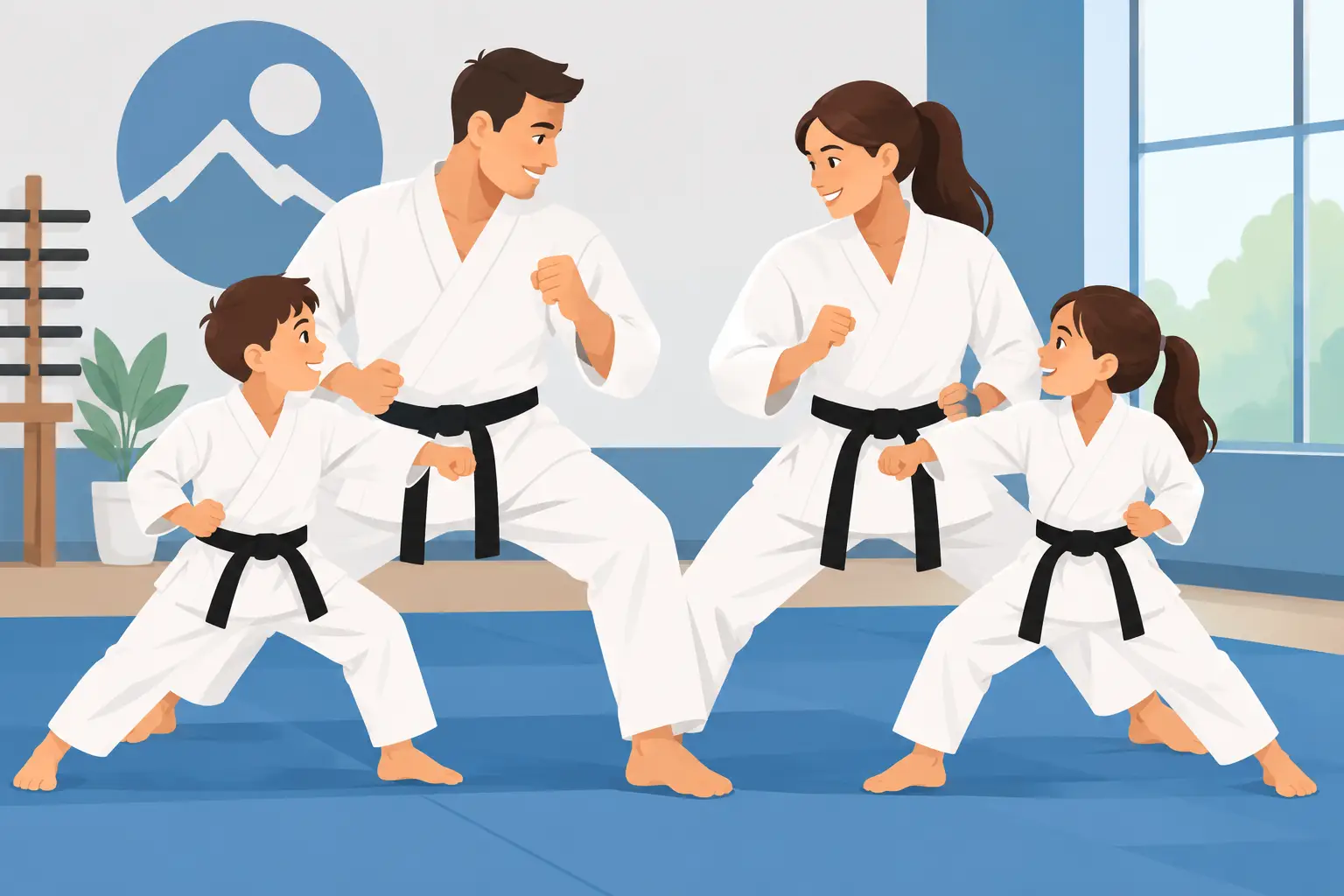
A child lands a clean stance after several attempts. A parent nearby sees the effort, not just the technique. Later that week, the same child remembers to pause, breathe, and try again when homework gets difficult. That is the lasting value of family martial arts classes: training does not end when class does. It becomes part of how a family handles challenge, effort, and growth.
For families in Pacifica, Daly City, and the surrounding Bay Area, karate can be much more than another after-school activity. Traditional Kosho Ryu Kenpo creates a structured setting where children, teenagers, and adults can become stronger in their own ways while sharing a meaningful standard of discipline and respect.
Family Martial Arts Classes Create Shared Standards
Families are busy. Parents are balancing work, school schedules, meals, activities, and the everyday moments that require patience. Children are learning how to listen, manage emotions, make friends, and recover from disappointment. Teenagers are navigating bigger expectations and greater independence. A martial arts dojo gives each family member a common language for meeting those moments.
In Kenpo training, students learn that progress is earned through repetition, attention, and good habits. A proper stance, a focused strike, or a precise block may look simple from across the room. Doing it correctly takes concentration. Students learn to receive correction without shutting down, practice with purpose, and take responsibility for their own improvement.
Those lessons carry naturally into home life. “Show respect,” “focus on the next step,” and “keep trying” become more than reminders from a parent. They are principles the student has practiced under pressure. For families, that shared experience can make conversations about effort and behavior more meaningful.
A Place Where Every Age Can Grow
Family-oriented training does not mean every student is taught exactly the same way. A five-year-old and an adult beginner have different physical abilities, attention spans, and reasons for starting. Strong instruction recognizes those differences while holding every student to clear standards.
Children build a foundation beyond the dojo
For children ages 5 to 12, karate offers an active, purposeful outlet. Instead of simply burning energy, students learn to direct it. They practice following instructions, waiting their turn, using controlled movement, and staying engaged through a challenge.
Confidence grows when children see that they can improve. A student who initially struggles with coordination may eventually perform a form with focus. A quiet child may begin answering with a strong voice. A child who becomes frustrated easily can learn to reset and return to the task. These are not instant changes, and that is part of what makes them valuable.
Parents often want an activity that supports better focus at school and more maturity at home. Martial arts can help, but it is not a shortcut or a replacement for parental guidance. Its value comes from consistent practice and reinforcement. When a child hears the same lessons about respect, responsibility, and perseverance from both family and instructor, those habits have a stronger chance to take hold.
Teenagers gain discipline without losing their individuality
Teen years bring their own pressures. Schoolwork, social expectations, sports, jobs, and screens can all compete for attention. A traditional martial art gives teenagers a place where effort is visible and progress is personal.
They do not need to be the strongest or most experienced student in the room to succeed. They need to show up, listen closely, and improve their technique over time. That process builds self-respect. It also offers a healthy alternative to the idea that confidence must come from being loud, popular, or naturally talented.
For teenagers, practical self-defense training can be especially meaningful when it is taught with control and sound judgment. The goal is not to encourage confrontation. It is to develop awareness, composure, physical readiness, and the ability to make safer choices under stress.
Adults train for strength, skill, and renewal
Adults often begin martial arts for fitness or self-defense, then discover they value the mental discipline just as much. Training asks you to be present. You cannot execute a technique with precision while replaying a work meeting or planning tomorrow’s schedule.
For parents, that focus can be a rare reset. Class becomes protected time to move, learn, and challenge yourself. It also allows children to see something powerful: adults are still students, too. When a parent works patiently through a difficult technique, they model humility, discipline, and resilience more clearly than any lecture can.
The Difference Between Activity and Traditional Training
Not every martial arts program has the same purpose. Some are primarily fitness classes with martial arts-inspired movement. Others focus heavily on competition. Both can offer benefits, depending on what a family wants.
Traditional Kosho Ryu Kenpo places special emphasis on technical precision, focused movement, practical application, and character. Students work toward technical mastery over time rather than chasing quick rewards. The pace may require patience, especially for beginners who want to move quickly to the next rank. Yet that patience is part of the training.
A quality dojo is serious without being harsh. Students need clear expectations, correction, and accountability. They also need instructors who notice individual strengths, learning styles, and areas that need support. The best environment is one where students feel welcomed enough to make mistakes and challenged enough to grow from them.
At Bay Area's Best Kosho Ryu Kenpo Karate, this balance is central to the training experience. Students are encouraged to develop habits of a warrior: respect, perseverance, self-control, and a willingness to work for meaningful progress.
What Families Should Look for in a Dojo
The right school should feel organized from the first visit. Watch how instructors speak to students. Are directions clear? Is correction specific and respectful? Do students appear engaged rather than intimidated? A welcoming community does not mean standards are low. It means students are supported as they work to meet those standards.
Ask how classes are organized by age and experience. Children need instruction that keeps them moving while reinforcing focus and control. Teenagers and adults need room to develop skill, fitness, and practical understanding without feeling rushed or overlooked. Class size, instructor attention, and a school’s willingness to help a new student acclimate can all affect the experience.
It also helps to understand the school’s view of advancement. Belt rank can be motivating, but it should represent more than attendance. Look for a program where progress reflects technique, consistency, attitude, and growing responsibility.
Finally, give your family a chance to experience the dojo firsthand. An introductory or trial class can reveal more than a website or schedule ever could. Notice whether your child leaves energized and proud. Notice whether you feel comfortable asking questions. The right fit often feels both challenging and encouraging from the start.
Perseverance Is the Lesson That Lasts
Traditional martial arts honors the idea of nana korobi ya oki: fall down seven times, get up eight. It is a simple philosophy, but families understand how much life it contains.
A child may miss a technique. A teenager may have an off day. An adult may return to training after years away and feel like a beginner again. Each situation offers the same choice: stop, or take the next step forward. Karate teaches students to choose the next step.
That is why shared training can strengthen a family far beyond physical fitness. It gives every member a place to practice courage, patience, and discipline, then bring those qualities home when they matter most.
Comments