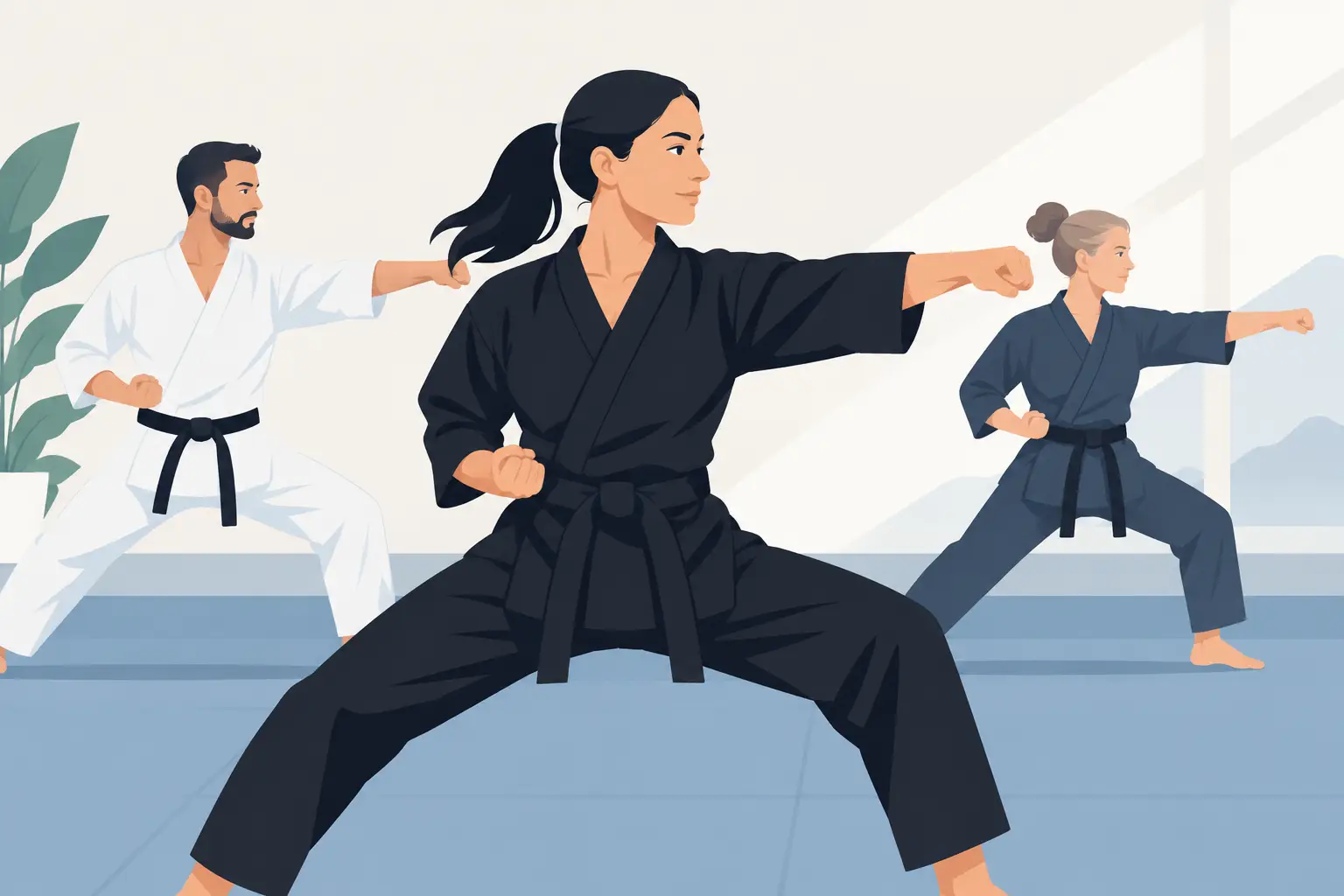
Martial Arts Fitness for Adults That Lasts

A treadmill can improve your cardio, and a weight room can build strength. But many adults eventually find that repeating the same workout does not hold their attention or challenge them in a meaningful way. Martial arts fitness for adults offers something different: a disciplined practice that strengthens the body while sharpening focus, building practical confidence, and teaching you how to keep showing up when training gets difficult.
For adults in Pacifica, Daly City, and the surrounding Bay Area, Kosho Ryu Kenpo provides a structured path into fitness that is not based on intimidation or quick fixes. You do not need a martial arts background, exceptional flexibility, or the fitness level you had at 20. You need a willingness to learn, patience with the process, and the courage to take the first class.
Why Martial Arts Fitness Works Differently
A good adult karate class asks your body and mind to work together. You may practice a stance that develops leg strength, execute combinations that build coordination, or move through defensive drills that raise your heart rate. At the same time, you are learning distance, timing, posture, breathing, and control.
That combination is what makes martial arts training sustainable for many adults. The goal is not simply to finish a workout exhausted. It is to improve a skill. When you can see that your balance is steadier, your technique is cleaner, or a sequence that once felt confusing has become natural, fitness becomes connected to real progress.
Traditional Kosho Ryu Kenpo also gives each class a purpose beyond calorie burn. Training develops habits of a warrior: attention to detail, respect for others, self-control under pressure, and the discipline to keep improving one repetition at a time.
The Physical Benefits of Adult Kenpo Training
Karate training can support a well-rounded level of fitness because it uses the body in varied, intentional ways. Stances and footwork challenge the legs, hips, and core. Strikes and blocks require coordinated engagement through the shoulders, back, and arms. Controlled movement patterns improve mobility, while drills and forms can build cardiovascular endurance.
The results depend on your starting point, consistency, and effort. Someone returning to exercise may first notice better energy, mobility, and balance. A more experienced athlete may appreciate the technical demands of generating power without losing precision. Both students have room to grow because Kenpo is not a single workout that becomes easy once you know the routine.
Just as important, karate encourages usable movement. You learn to maintain posture while moving, change direction with control, and use your whole body rather than relying on one muscle group. That can carry into everyday life, whether you are lifting groceries, sitting at a desk for long hours, keeping up with children, or simply wanting to feel more capable in your own body.
Fitness With a Purpose
There is a difference between moving fast and moving well. In martial arts, a punch is not just an arm exercise. It begins with balance, travels through the body, and ends with control. A defensive movement is not just a stretch. It is an opportunity to practice awareness, position, and response.
This purposeful training helps adults stay engaged. Every drill has technical lessons to refine, even after the initial physical challenge becomes familiar. The body gets stronger, but so does your ability to concentrate under effort.
Confidence Comes From Practice, Not Pretending
Many adults are interested in self-defense, yet confidence does not come from memorizing a few moves in one afternoon. It grows through repeated, supervised practice. Students learn to stand with awareness, manage distance, move with intention, and develop the calm focus needed to make better decisions.
Practical self-defense training should be grounded in responsibility. Avoiding danger, recognizing your surroundings, and using sound judgment matter as much as physical technique. A traditional dojo teaches that strength is not about seeking conflict. It is about having the self-control and capability to protect yourself and those around you when necessary.
This kind of confidence often appears outside the dojo as well. Adults may speak up more clearly at work, handle stressful moments with greater patience, or feel less overwhelmed by challenges that once made them hesitate. The change is not magic. It comes from meeting a difficult task, working through it, and recognizing that you can improve.
Starting as a Beginner Is an Advantage
It is common to worry about being out of place in an adult martial arts class. Some prospective students assume everyone else will be younger, faster, or more advanced. The truth is that every skilled martial artist began as a beginner, learning where to place their feet and how to make a basic stance correctly.
A supportive dojo does not expect new adults to perform like black belts. It expects them to listen, practice, ask questions, and improve at their own pace. Individual instruction matters because students arrive with different strengths, prior injuries, schedules, and goals. Technical precision should be taught with clear standards and patience.
If you have not exercised in years, begin conservatively and communicate with your instructor. If you already run, lift weights, or play another sport, be prepared to learn a new kind of coordination. Martial arts can complement other fitness habits, but it should not be treated as a competition against the person next to you.
Consistency Builds More Than Conditioning
The strongest results usually come from regular training, not from trying to do everything perfectly in the first month. Two focused classes each week can create meaningful momentum when they become part of your routine. You start to recognize techniques, your conditioning gradually improves, and the dojo becomes a place where you can leave daily distractions behind and focus on the work in front of you.
This is where the Japanese perseverance philosophy of nana korobi ya oki becomes meaningful: fall down seven times, get up eight. Adults understand that life can interrupt routines. Work becomes demanding, family responsibilities increase, and motivation rises and falls. The discipline is not never missing a step. It is returning to practice with humility and purpose.
At Bay Area's Best Kosho Ryu Kenpo Karate, adult students train in a family-oriented community that takes traditional martial arts seriously while making room for real people and real lives. The standard is meaningful progress, earned through effort, respect, and consistent practice.
Choosing the Right Adult Martial Arts Program
Not every martial arts program serves the same goal. If you only want a high-intensity workout, a fitness-focused class may suit you. If you want exercise combined with technical development, practical self-defense, personal discipline, and a long-term path of mastery, traditional Kenpo offers more depth.
Look for an instructor who can explain why techniques work, correct details without discouraging you, and create an atmosphere where beginners and experienced students can train with respect. The right program should challenge you without making you feel like you need to prove yourself before you have learned the basics.
Your first class is not a test of whether you are already fit enough. It is a chance to notice how training makes you feel: more focused, more capable, and ready to return. Start where you are, train with care, and let each class become proof that strength can be built one disciplined step at a time.
Comments