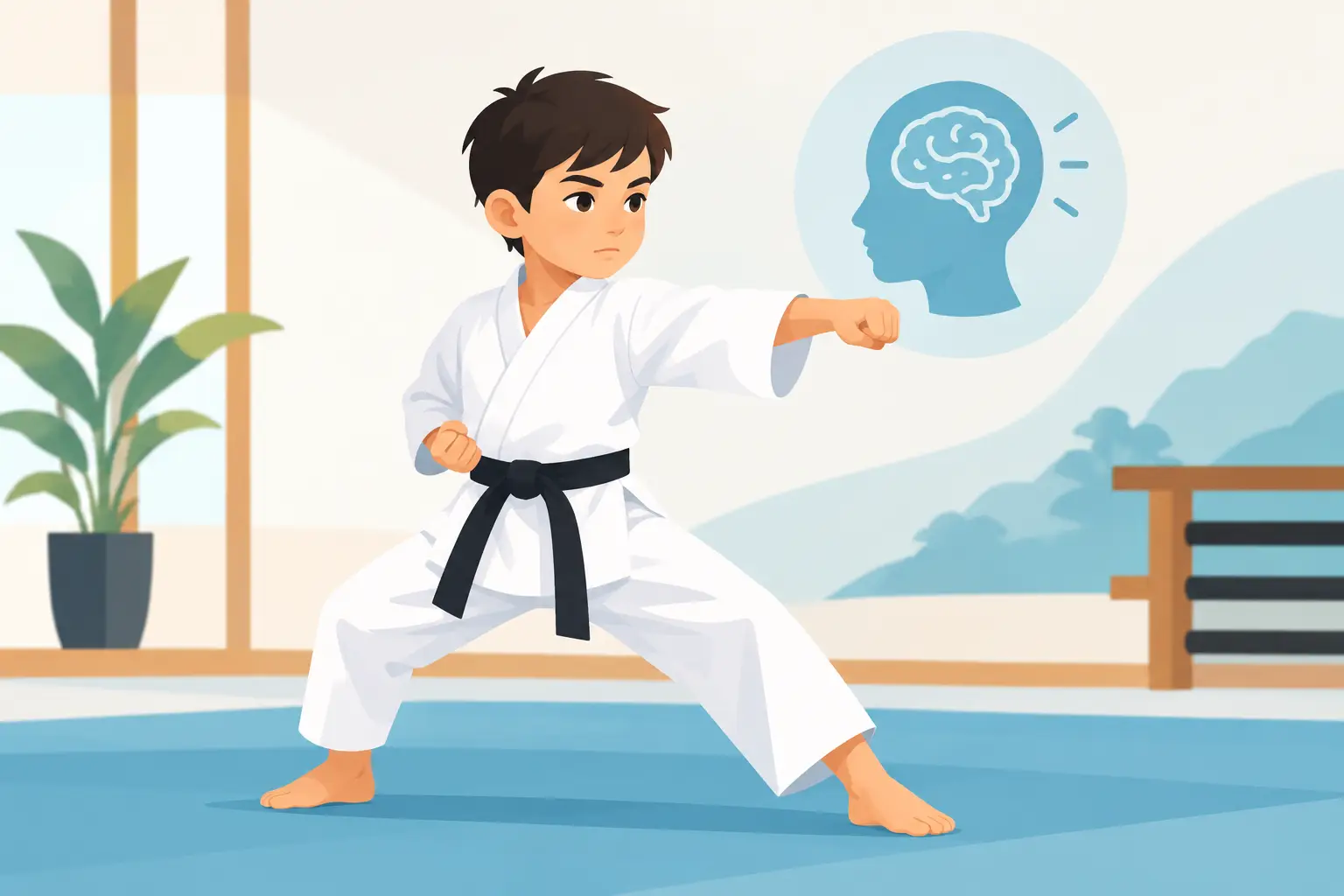
How Martial Arts Improve Focus in Kids

A child who struggles to finish homework may not need another lecture about paying attention. They may need a place to practice attention in small, repeatable moments: standing still before class begins, listening for a direction, setting their feet correctly, and trying again after a mistake. That is one reason martial arts improve focus kids need for school, home, and everyday life.
At Bay Area's Best Kosho Ryu Kenpo Karate, focus is not treated as a personality trait that some children have and others do not. It is a skill developed through patient coaching, clear standards, and consistent practice. A child does not have to arrive naturally calm, coordinated, or confident. They simply need a supportive environment where they can learn one disciplined habit at a time.
How Martial Arts Improve Focus in Kids
Traditional karate gives children a direct reason to pay attention. In a Kosho Ryu Kenpo class, a student must watch the instructor's stance, listen to the sequence, control the timing of a movement, and respond appropriately to a partner or drill. Attention is not an abstract idea. It is built into what they are doing with their body.
A child may begin by learning to stand in a ready position without fidgeting. Then they learn a block, a punch, or a footwork pattern. As their skills develop, they need to remember combinations and make adjustments when a technique is not precise. This progression asks students to concentrate for manageable periods, then gradually extends what they can handle.
The benefit is not that karate turns every child into a perfectly quiet student overnight. Children are still children. They can be tired after school, excited to see friends, or distracted by a difficult day. What training provides is a reliable practice for returning attention to the task. That ability to reset matters as much as staying focused in the first place.
Clear routines reduce mental clutter
Children often focus better when expectations are consistent. A structured dojo class has a beginning, a purpose, and a sequence. Students know when to line up, when to listen, when to practice, and when to ask questions. Those routines create a sense of security, particularly for children who feel overwhelmed by busy classrooms or changing activities.
Rather than asking a child to “focus” without direction, a good instructor gives a specific target: eyes forward, hands up, feet in position, breathe, and try the next repetition. Small instructions are easier to follow than broad corrections. Over time, children begin to recognize what focused effort feels like in their own bodies.
Precision makes attention meaningful
Kosho Ryu Kenpo is not about throwing movements carelessly until a child is tired. Traditional training values technical precision. The angle of a block, the balance of a stance, and the control behind a strike all require thought and deliberate effort.
For many children, that connection is powerful. They see that paying closer attention helps them perform better. A technique feels stronger, a sequence becomes smoother, and the next belt goal feels more achievable. Focus stops being something adults demand from them and becomes a tool they can use to improve.
Focus Is Built Through Movement, Not Just Stillness
Some children have a hard time concentrating when they have been sitting most of the day. Martial arts gives them an active channel for energy while still requiring self-control. They can move, kick, practice forms, and work on conditioning, but they must do so with awareness and respect for the space around them.
This is different from simply running until they are exhausted. Karate asks children to regulate their bodies. They must stop when the instructor says stop, maintain a safe distance from classmates, and control power during partner drills. Active movement paired with clear boundaries can help children practice the shift from high energy to purposeful action.
That said, every child responds differently. A highly energetic child may benefit most from the physical structure of class, while a more reserved child may need time to feel comfortable participating. The right program does not force every student into the same mold. It sets the same standards while providing individual attention and encouragement.
Repetition strengthens concentration
Repeating a technique can look simple from the outside, but it teaches a valuable lesson: improvement often comes from returning to the same task with better attention. A student may practice a form several times, notice that their stance is too narrow, receive a correction, and try again.
This is where perseverance becomes part of focus. The Japanese philosophy of nana korobi ya oki - fall down seven times, get up eight - is more than a motivational phrase. It teaches children that mistakes are not a reason to quit or mentally check out. They are information for the next attempt.
That mindset can carry into schoolwork. A child who has learned to correct a stance without embarrassment may be more willing to revise a paragraph, retry a math problem, or ask a teacher for help. Karate cannot remove every frustration, but it can give children practice staying present when something is challenging.
Respect Helps Children Direct Their Attention
Focus is not only about looking at an instructor. It also includes awareness of other people. In a respectful martial arts environment, children learn to wait their turn, listen while another student receives feedback, and train safely with partners of different sizes and skill levels.
These habits support social maturity. When children understand that their actions affect the group, they become more aware of timing, personal space, and appropriate responses. A dojo community gives them a place to practice these skills with guidance instead of expecting them to figure everything out alone.
Respect also makes correction easier to accept. Children are more likely to listen when they know a teacher is patient, fair, and invested in their progress. Firm standards and warmth belong together. A child needs to know that effort is expected, but also that they will be supported while learning.
What Parents May Notice Outside the Dojo
The signs of growing focus are often subtle at first. Parents may notice their child getting ready for class with less prompting, remembering part of a form at home, or taking more pride in completing a task. These changes are meaningful because they show a child beginning to connect effort with progress.
Over time, some families see stronger listening habits, better patience with routines, and more confidence when facing a new challenge. Others notice that their child has a healthy way to release energy after school. Results vary by age, personality, attendance, and the support a child receives at home and in class.
It is also wise to keep expectations realistic. Martial arts is not a replacement for school support, medical guidance, or individualized services a child may need. It can, however, be a constructive part of a broader routine that helps a child practice discipline, emotional control, physical fitness, and concentration.
How parents can reinforce the lesson
Parents do not need to become karate instructors at home. The most helpful support is often simple and consistent. Ask what your child practiced, praise effort rather than only belt rank, and encourage them to describe one correction they worked on. This keeps the emphasis on learning, not perfection.
A predictable schedule also helps. When children attend regularly, they have enough repetition to build confidence and retain skills. Missing a class occasionally is normal, but long gaps can make it harder for young students to feel connected to their progress and their dojo community.
Choosing a Program That Supports Real Growth
Not every martial arts class places the same value on focus and character development. Parents should look beyond flashy demonstrations or promises of quick results. Observe whether instructors give clear corrections, whether students are treated with respect, and whether beginners receive patient guidance.
A strong children’s program balances structure with encouragement. It should challenge students to improve while making room for different learning styles and starting points. Technical mastery matters, but so does helping a child leave class feeling capable, included, and ready to return.
For families in Pacifica, Daly City, and nearby Bay Area communities, traditional Kosho Ryu Kenpo can offer more than an after-school activity. It can be a steady place where children build warrior habits: listening closely, moving with purpose, recovering from mistakes, and showing respect even when a task is difficult.
The next time your child seems scattered or discouraged, look for opportunities that let them practice focus rather than merely be told to have it. With patient instruction and regular effort, each ready stance, careful technique, and respectful bow can become a small step toward greater confidence and control.
Comments